
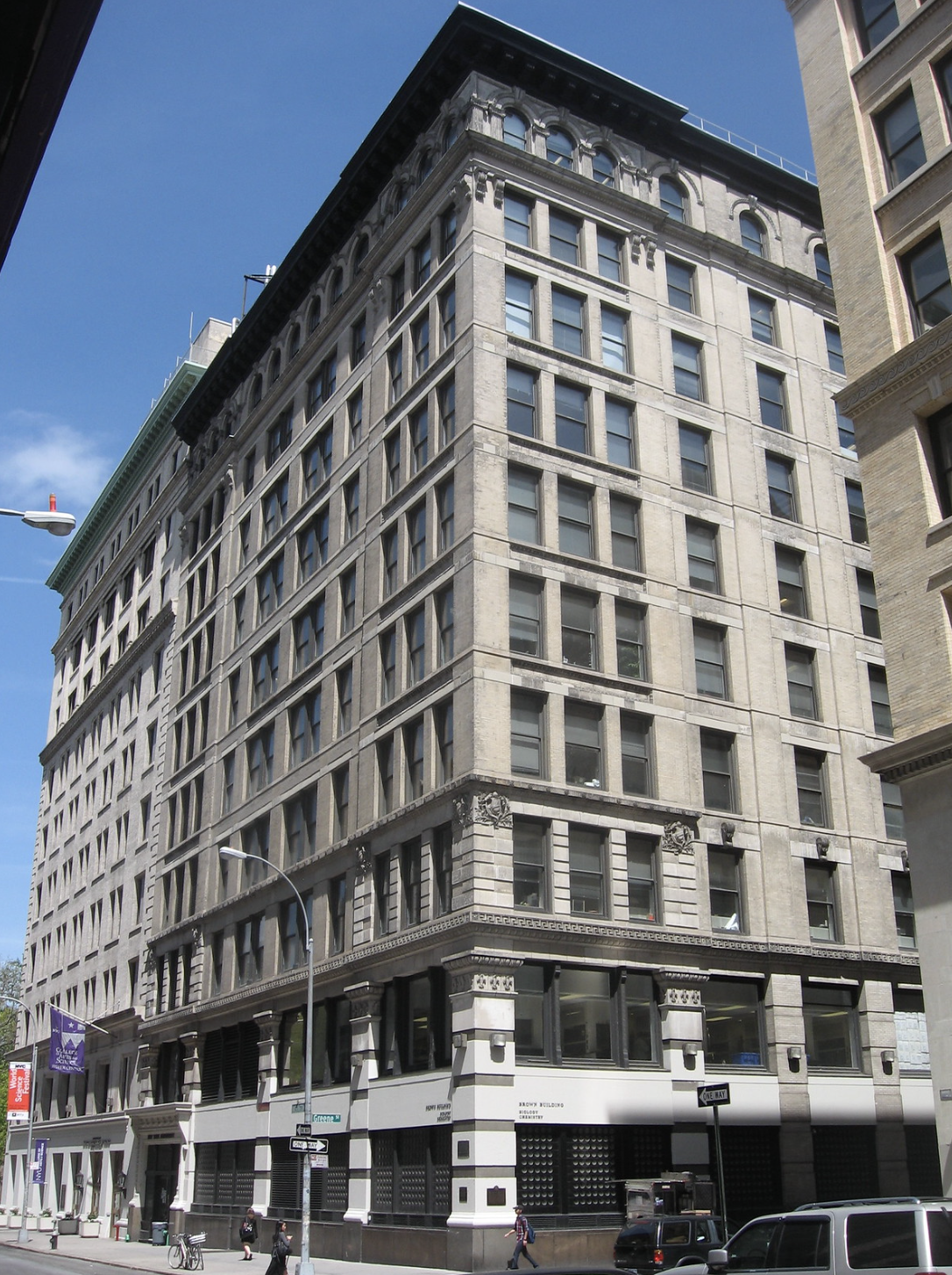


Urban Matters: The Triangle Shirtwaist Fire of 1911 killed 146 New York City garment workers, most of them young immigrant women. With exits blocked or locked, many jumped to their death from eighth floor windows. David, in Fire in the Heart of the City, newly published by NYU Press, you link that awful tragedy to what you subtitle as ‘the origins of modern charity.’ What do you see as that connection?
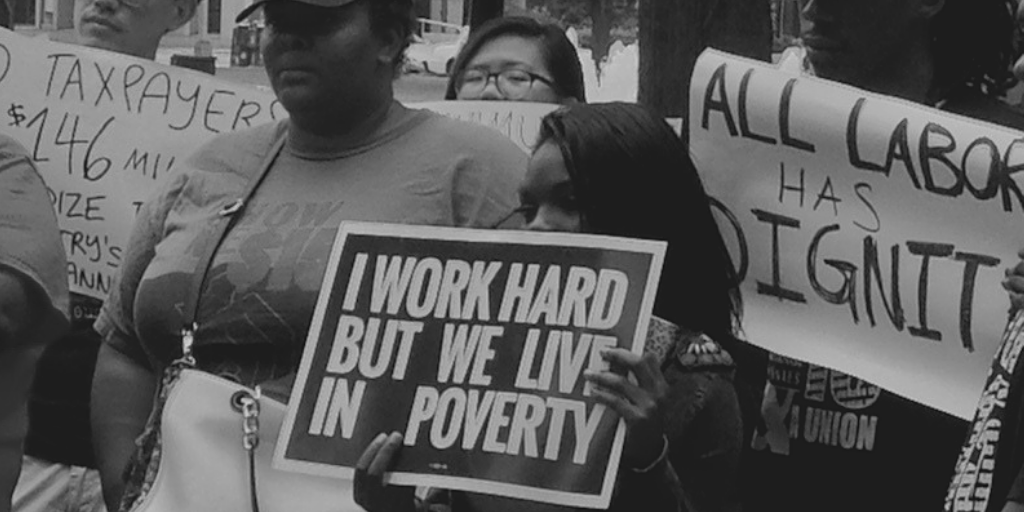
David Conrad-Pérez: The Triangle fire [which took place at the Asch (now Brown) Building on Washington Square, pictured above] did more than expose the dangers of industrial labor. It also became a test of who would be trusted to respond to systemic inequality. After the fire, enormous amounts of money and sympathy poured into New York. You had immigrant communities, unions, and emerging professional charities all competing – sometimes directly and confrontationally – over how that relief should be distributed and who had the authority to speak for the victims.
What emerged from that struggle was a model of charity that would become increasingly familiar in 20th century America: centralized, professional, expert-driven, and supported by wealthy private donors. Its leaders believed that trained experts rather than neighborhood groups or labor organizations should investigate need, determine who deserved assistance, and administer relief. There were some real advantages to that professionalization, but it also shifted power away from workers and immigrant communities toward institutions that could present their judgments as neutral, ‘scientific’ expertise. The consequences of empowering their vision were profound.
When I call Triangle part of the ‘origins of modern charity,’ I don’t mean that philanthropy or social work suddenly began in 1911. But the fire gave these emerging organizations their biggest stage, along with legitimacy and public funding.
UM: You describe how that ‘scientific’ philanthropy promoted definitely pseudo-scientific ideas about race, poverty, and immigration. How did that shape the social and political response to the Triangle Fire tragedy?
Conrad-Pérez: One of the striking things about this period is how readily racist ideas of social hierarchy could be presented as science. The charities empowered after the fire, primarily through a partnership with The New York Times, treated poverty not simply as the result of low wages, unsafe work, discrimination, or political inequality, but as something experts could diagnose in individuals and families. Ideas about heredity, racial fitness, immigration, dependency, and ‘deservingness’ were funded and circulated by leading charities as if they were scientific truths. In doing so, they categorized new immigrants – primarily from southern and eastern Europe at this time – as populations to be studied, institutionalized, and restricted. In other words, the people of the Lower East Side were painted as communities for investigation, not as workers and citizens making claims on American democracy.
Professional charities could therefore present themselves as neutral, rational, and scientific while worker-led organizations who picketed – which was the most effective legal mechanism they had to raise attention – were labeled politically and socially disruptive. That distinction gave charitable experts tremendous authority to determine what families needed, how relief should be distributed, and which responses to the disaster were considered legitimate.
Soon after, these same assumptions fed into much larger debates over immigration restriction, eugenics, welfare, and who was considered fit to belong in modern America.
UM: Well, unquestionably, elitist upper-class attitudes and interests clashed with working- class militancy both before and after the fire. But in the process, there were progressive legislative and political outcomes, right? How did they lay the groundwork for later reforms, especially during the New Deal?
Conrad-Pérez: Yes, absolutely. The reforms were real and consequential. The fire accelerated factory-safety legislation in New York, strengthened the state’s role in regulating working conditions, and elevated figures such as Al Smith, Robert Wagner, and Frances Perkins, who would later become central to the New Deal.
The New York Factory Investigating Commission was especially important. It did far more than produce a handful of new fire codes. It helped establish the principle that government had both the authority and the responsibility to investigate workplaces, set minimum standards, and protect workers from dangerous conditions. That represented a significant departure from older assumption that relations between employers and workers were largely private matters.
Perkins, who witnessed the Triangle fire, later became FDR’s secretary of labor and helped shape Social Security, unemployment insurance, and federal wage-and-hour protections.
So, the book doesn’t argue that this familiar reform story is wrong. But it is incomplete. Triangle helped expand the legitimacy of government regulation and collective responsibility, while at the same time strengthening a professional charity system that treated immigration and poverty as problems to be managed, rather than confronting the inequalities workers themselves were organizing to change.
UM: In many respects, life in New York today bears no resemblance to what your book describes. Tens of thousands of garment workers sewing 70 percent of the nation’s women’s clothing: the distant past. A New York Times regularly spouting anti-union editorials: doesn’t sound familiar now. So, why did you choose to tell this story? Is there useful knowledge a reader today can gain from it?
Conrad-Pérez: Agreed. New York today is a very different city. But I think the familiar tragedy-to-reform story of the Triangle fire has given us a false sense of closure about a history whose deeper legacy is still with us.
The factory owners were never meaningfully held accountable. The New York Times never reckoned with its role in delegitimizing garment workers’ organizing before the fire. And the expert-led model of professional charity that gained enormous authority in Triangle’s aftermath still shapes how we respond to many social problems today.
The uncomfortable reality is that we often respond to crises in much the same way: something terrible happens, we’re horrified, people give money, and institutions mobilize. That can do tremendous good. But Triangle asks us to move beyond 'Who needs help?' and also ask, 'Who gains power from the way that help is organized?'
The garment workers were not simply asking New York to pity them. They were demanding the ability to organize and shape solutions themselves. Yet much of the city’s sympathy flowed through institutions that claimed the authority to decide what they needed – often leading to tragic consequences.
That, to me, is Triangle’s enduring lesson. Charity is never only about generosity. It is also about power. Sometimes historical distance helps us see those structures more clearly than we can while living inside them.
David Conrad-Pérez is a media historian and the research director of the Center for Media & Social Impact at American University. Fire in the Heart of the City: The Triangle Shirtwaist Tragedy and the Origins of Modern Charity, is published by New York University Press.
Photo by: Matthew X. Kiernan
There's no previous post
Back to PublicationsThere's no next post
Back to Publications