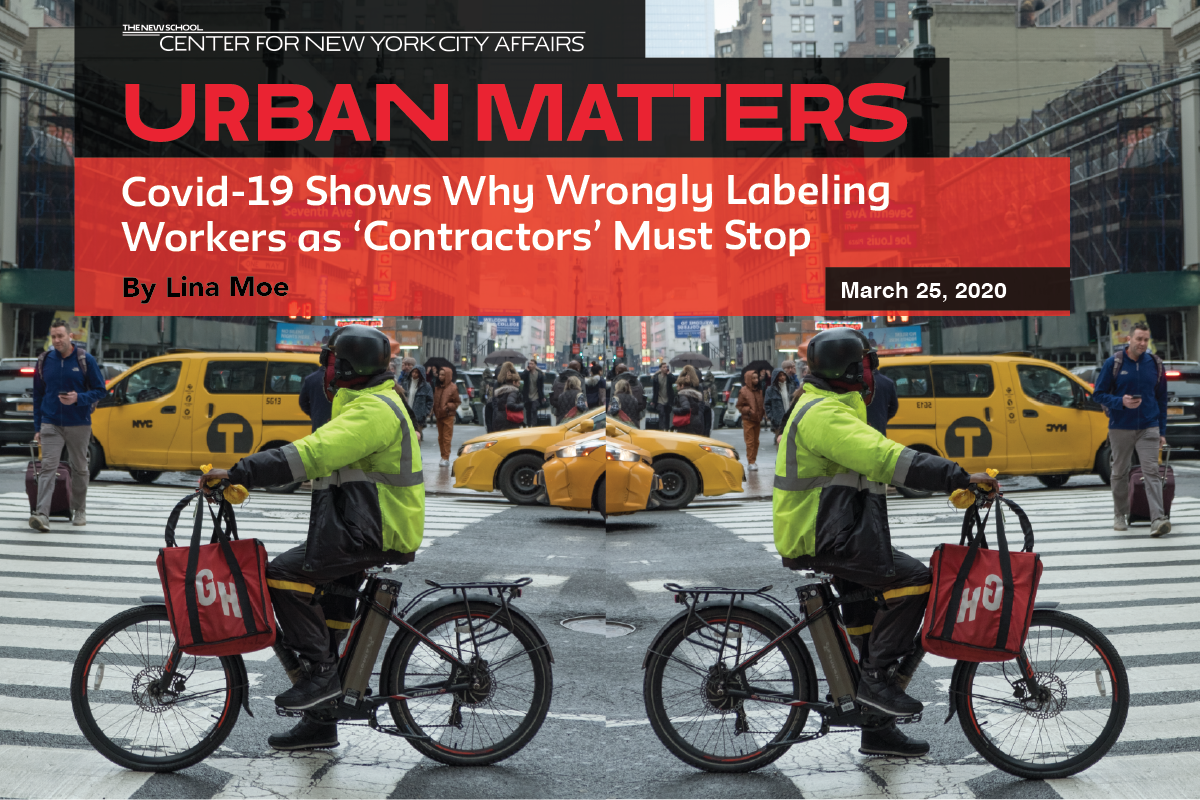

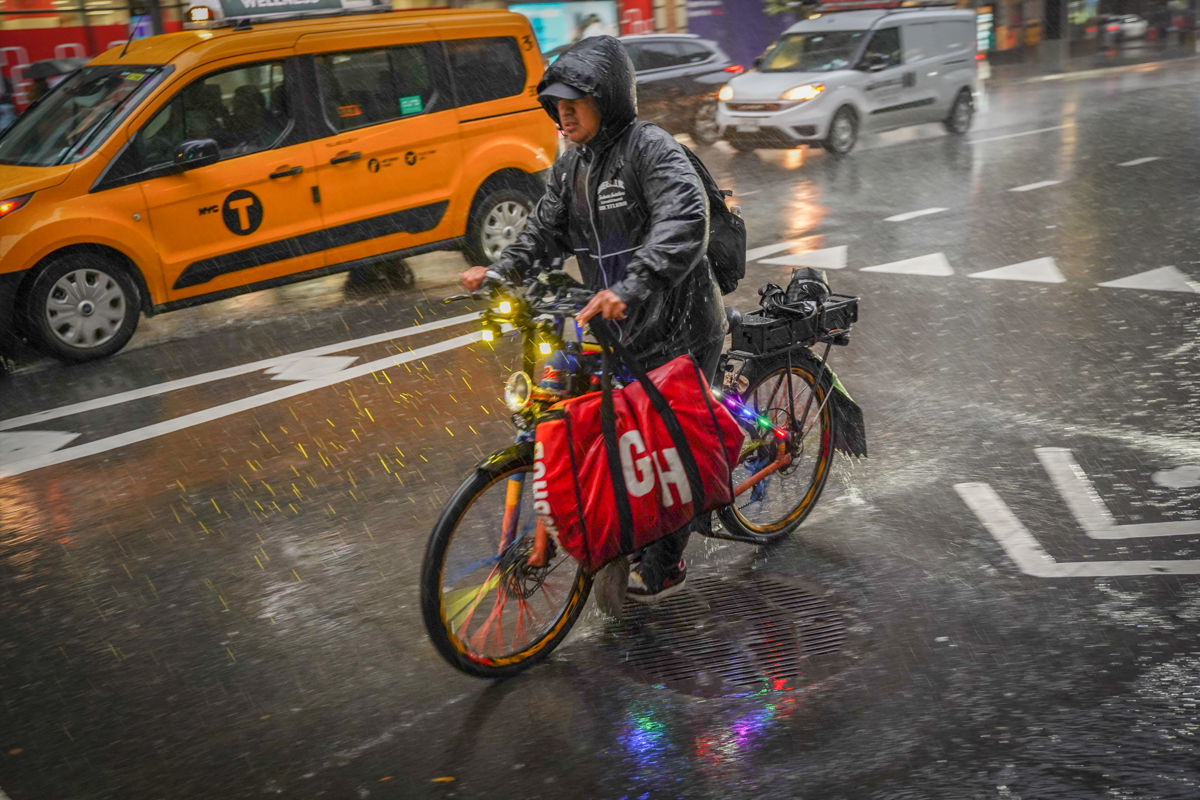


New York and Seattle were the first cities in the nation to establish minimum pay standards for delivery workers. The results in each offer a crucial lesson about how to structure such regulations to truly benefit gig workers – workers who, because they are regarded as independent contractors, aren’t protected by the wage and hour laws governing payroll employment.
First as to New York, where, strangely enough, a certain “person bites dog” story seems to have unfolded.
Are the app-based food delivery companies here, who at first strenuously opposed the pay standard enacted by the City Council in 2023, now embracing this measure, which crucially includes limitations on the number of workers? That might be the case, given a recent corporate report on New York City’s food delivery pay standard.
It’s genuinely hard to know what to make of an analysis rolled out by a Big Tech organization called the Chamber of Progress that includes all the major delivery and rideshare apps (as well as Amazon, Google, and Apple). In its reports, the Chamber of Progress describes itself as “a center-left tech industry policy coalition promoting technology’s progressive future.” That’s a curious description, considering that members include such chronic fairness to labor challenged companies as Amazon, DoorDash, and Uber.
The Chamber of Progress report is based on quarterly summary data published by the City’s Department of Consumer and Worker Protection (DCWP) that tracks delivery activity, worker compensation, and consumer and merchant fees. It notes that under the New York City restaurant food delivery pay standard that took effect in December 2023, delivery worker base pay per hour tripled from $7.08 in the first quarter of 2022 to $21.04 in the second quarter of 2025.
That pay standard was structured to reduce unproductive worker waiting time. The Chamber of Progress also reports that the pay standard incentivized delivery companies to reduce superfluous worker access to their apps. The latest DCWP data show that the number of workers performing deliveries fell from 76,000 in the last quarter before the pay standard to 70,000 in the fourth quarter of 2025, cutting unproductive waiting time for the remaining workers by three-fourths.
The City’s regulation meant that the companies finally had to manage the number of workers on their platforms to better align with the level of consumer demand. Previously, the companies exploited the desperation of workers, forcing thousands of them to take on the expense of purchasing and maintaining e-bikes, even though there was no way they all could ever earn decent pay. That’s an old corporate trick all too common among new tech apps: creating a reserve army of surplus workers to force worker pay as low as possible.
With the workforce now realistically scaled to align with customer orders (which have continued to increase by double-digit annual rates), the Chamber of Progress notes that deliveries per hour rose by 58 percent and the remaining workers have hourly earnings that are “meaningfully improved.”
The Chamber of Progress report unambiguously makes the case that New York City’s gig economy regulations have made the industry more efficient, increasing worker productivity and boosting compensation in the process.
(Using the same DCWP dataset their report cites, I would add: consumers also have benefitted, since the share of each customer dollar going to delivery company fees or tips has declined by five percent under the pay standard. Even then, the app companies still net $5.50 per delivery order, which is almost as much as they made pre-standard.)
A section heading in the Chamber of Progress report (“The Regulatory Landscape: Far from the Wild West”) captures the impact of New York City’s pay standard. I agree: together, the City Council and DCWP effectively tamed a Wild West of inefficiency and exploitation that the delivery apps had created.
There’s a lesson for Seattle here, where a delivery driver pay standard took effect in January 2024. There, the app companies continued to on-board new drivers as that city’s pay standard took effect. With the establishment of a pay floor having the effect of raising pay per delivery, it’s not at all surprising that new drivers were attracted to the industry. There was nothing in the Seattle pay regulation, however, that restricted new entry – something that the New York pay standard did.
Result: The drivers in Seattle who were on the delivery apps before the standard kicked in experienced an increase in idle time and a reduction in delivery orders. Researchers from Carnegie Mellon University concluded that the overall net effect was that in the initial months after the Seattle standard was effective, those experienced drivers saw no net gain in monthly earnings when you combine base pay and tips.
In short, some Wild West conditions persisted in Seattle post-regulation – and not just in managing the size of the delivery workforce. As they had in New York City, the delivery apps loudly pushed back against the new regulations, in part by making it harder to tip delivery workers. Even more directly antagonizing to customers, Uber Eats and DoorDash added a $5 per order consumer fee in Seattle. And as the Carnegie Mellon researchers suggested, some company changes in Seattle might have been designed to create a pay standard backlash among drivers. That might explain the researchers’ findings that incumbent delivery workers received fewer order offers while newly signed on drivers soon accounted for a majority of all deliveries.
The Carnegie Mellon economists conclude that restricting entry of new drivers would make it more likely that implementing a minimum pay standard would improve drivers’ earnings.
The lesson: While the delivery companies could manage the pool of delivery workers better on their own, in Seattle they haven’t. New York City’s approach shows that goal can be accomplished through regulation. It has been more effective in raising pay for workers and taming the Wild West economy created by the app companies. And as the Chamber of Progress report shows, New York City also requires the companies to provide the data that lead even Big Tech corporate analysts to draw the appropriate conclusions.
James A. Parrot is a senior advisor and fellow at the Center for New York City Affairs at The New School.
Photo credit: BikePortland
There's no previous post
Back to PublicationsThere's no next post
Back to Publications




























.jpg)


.jpg)




.jpg)