


A note to our readers: Urban Matters will resume its regular weekly publication schedule in September.
It is impossible to capture all that the loss of St. Vincent’s [which closed in 2010, after 160 years in Greenwich Village] has meant, not just for those who worked there or relied on its services but for all who had been touched by the spirit of the place.
The emotional response [to the hospital’s closure] was particularly pronounced among those who had dedicated their lives to St. Vincent’s. “It absolutely breaks my heart,” said Dr. Jayne Rivas, the head of the hospital’s pediatrics department, whose first experience at St. Vincent’s came in high school when she volunteered at the hospital as a “Vincenteen.” It was then that she “absolutely fell in love with medicine and St. Vincent’s.” Initially drawn to nursing, counselors in college convinced her to pursue medicine, which led her back to St. Vincent’s. Looking back after the closure, she hoped that the hospital would be remembered for the “love [we] gave patients…. We never turned anyone away, ever. It was exactly what Christ was telling us to do.”
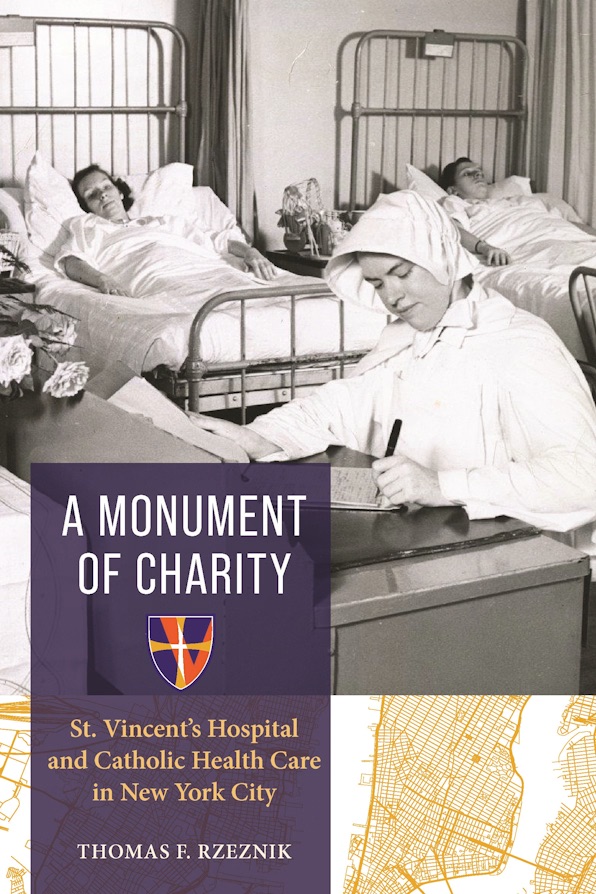
In reflections offered at a special liturgy held in the hospital’s chapel the month after the closure, nurse Joan Caruana recalled how the Sisters of Charity [who founded the hospital in 1849] “taught us to care for patients with respect” and how she and others “learned to be the best nurses this city, any city, will ever see.” She reminded her fellow alumnae of the hospital’s School of Nursing – which had shaped successive generations from its founding in 1892 until its discontinuance in 1999 – that “the spirit of St. Vincent’s will not die as long as there is one Saint Vincent’s nurse alive who will carry forth that which we have learned and lived.”
Similar sentiments were expressed by Sister Jane Iannucelli, the president of the Sisters of Charity, when she spoke to employees gathered in the emergency department on the hospital’s final day. Offering an impromptu prayer of gratitude, she acknowledged that “the doors may be closed [and] the pain in our heart is absolutely unbearable,” but invited those around her to “take a minute to be together and know that when we go . . . we go together with the spirit that has bonded us together as a community of service.”
The loss of the hospital bore heavily on the Sisters of Charity. St. Vincent’s had been their pride and joy, as well as their most visible ministry. Further weighing on the sisters in the years that followed was the question of their own future. On April 27, 2023, the Sisters of Charity announced that they had set themselves on a “path to completion.” While affirming the value of religious life, they decided that they would “no longer work toward finding new members of our Congregation.” The news stunned New Yorkers whose lives had been touched and transformed by the sisters. Yet the realities were impossible to ignore. At the time, the community’s ranks had fallen to 154, and it had been more than 20 years since a new member had joined the order. Like many other communities of women religious across the country, the Sisters of Charity recognized that it would now be up to others to carry on their legacy.
Among those who wrestled with the loss of the hospital was Cusi Cram, a playwright and longtime Village resident, who paid tribute to St. Vincent’s in her play, Novenas for a Lost Hospital. First staged in 2018, the drama moves back and forth across time, with nine vignettes that juxtapose experiences of patients and caregivers at the hospital during the cholera epidemics of the mid-nineteenth century and the AIDS crisis of the 1980s. Performances concluded with cast and audience processing by candlelight to the nearby AIDS Memorial Park [pictured below] in a vigil to honor not just those who had died but the hospital itself.

Reflecting on Cram’s work, Sister Miriam Kevin Phillips felt that the play spoke to the sadness still present within the community years after the closure. The play urged audience members to consider how and why institutions like St. Vincent’s mattered and what their absence means. It invited them to ask themselves who would care for them and the city in the next moment of need, a question that became very real to many two years later when the Covid-19 pandemic struck.
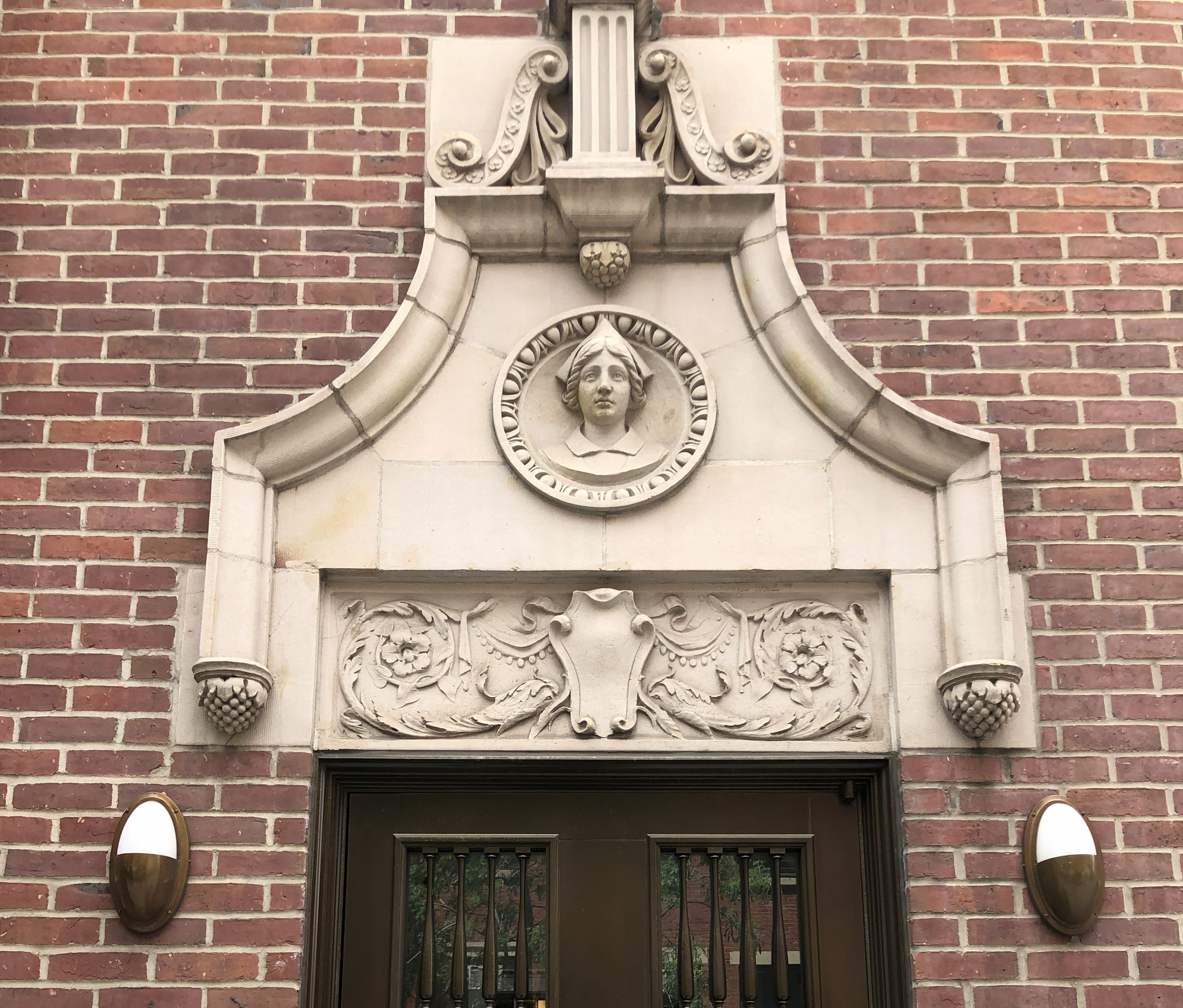
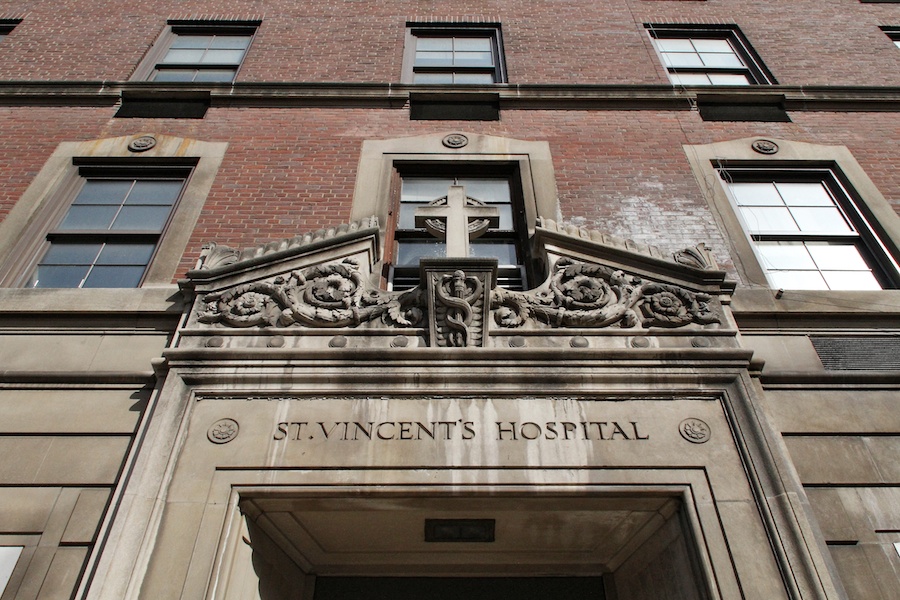
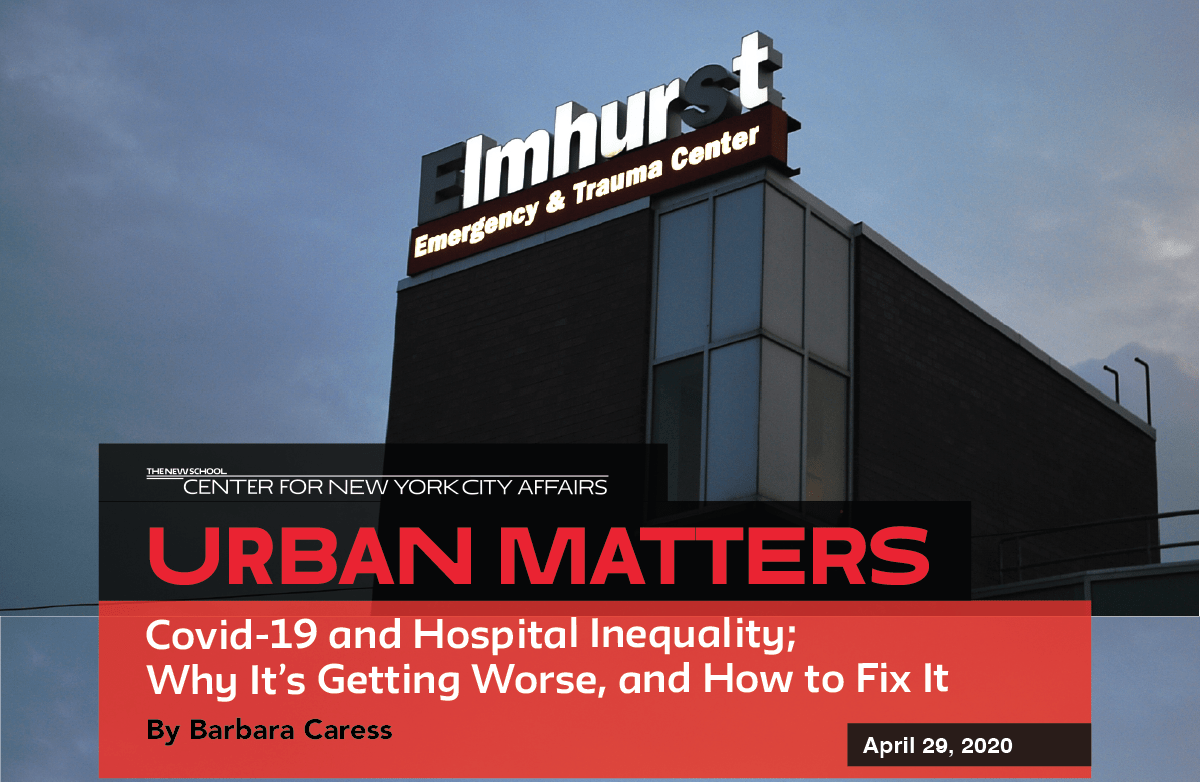
Vestiges of St. Vincent’s remain where the hospital once stood. Several of the older buildings were preserved as part of the redevelopment plan, including the Spellman Pavilion on West 11th Street and the old nurses’ residence and Smith and Raskob Buildings on West 12th. Though both have now been converted into luxury condominiums, passersby can still see “St. Vincent’s Hospital” carved above the entrance of Spellman and busts of nurses with their distinctive caps on the façade of the nurses’ residence. The O’Toole Building was acquired by Northwell Health, which opened a 24-hour emergency center at the site.
The name of the hospital also lives on as part of the AIDS Memorial Park. The hospital’s old triangle property bounded by Seventh Avenue, West 12th, and Greenwich Avenue was donated to the city and dedicated to all those who died from AIDS. In tribute to St. Vincent’s, the park’s design includes a series of six granite medallions embedded in the walkways that commemorate key moments in the hospital’s history: the founding of the Sisters of Charity of New York, the establishment of the hospital, and its response to the Triangle Shirtwaist Fire, the sinking of the Titanic, the AIDS crisis, and the attacks of 9/11.
The decision to honor these moments speaks to the way the hospital lives on in popular memory, not so much for the medical breakthroughs or technological innovations that took place within its walls but for the care it provided in times of crisis. More than just a tribute to one institution, the medallions speak to the role of women religious in the creation of Catholic health care in the United States and its contributions to social welfare. They are a reminder of the work and witness of those who dedicated themselves in service to the poor and suffering, offering hope and healing to those in need. They serve as memorials to the monumental work of charity carried out at St. Vincent’s and continued still at Catholic hospitals and healthcare facilities across the country.